A note on transliteration
A, i, y, a, w, b, p, f, m, n, r, h, H, x, X, z, s, S, q, k, g, t, T, d, D
This website uses the Traditional/Gardiner transliteration system. You may see slightly different conventions in other books and websites, but the underlying Egyptian consonants are the same.
If you want to use the same transliteration font as I do, it is called Trlit_CG Times and it’s freely available on https://dmd.wepwawet.nl/fonts.htm.
Software / Tools
All hieroglyphs on this website were created using JSesh (http://jsesh.qenherkhopeshef.org), a free word processor for hieroglyphs developed by Serge Rosmorduc.
Recommended books – Middle Egyptian grammar
The following books are great resources for learning Middle Egyptian, especially if you want to learn by yourself. Each has its own strengths, so the best one for you will depend on your level and how you prefer to learn.
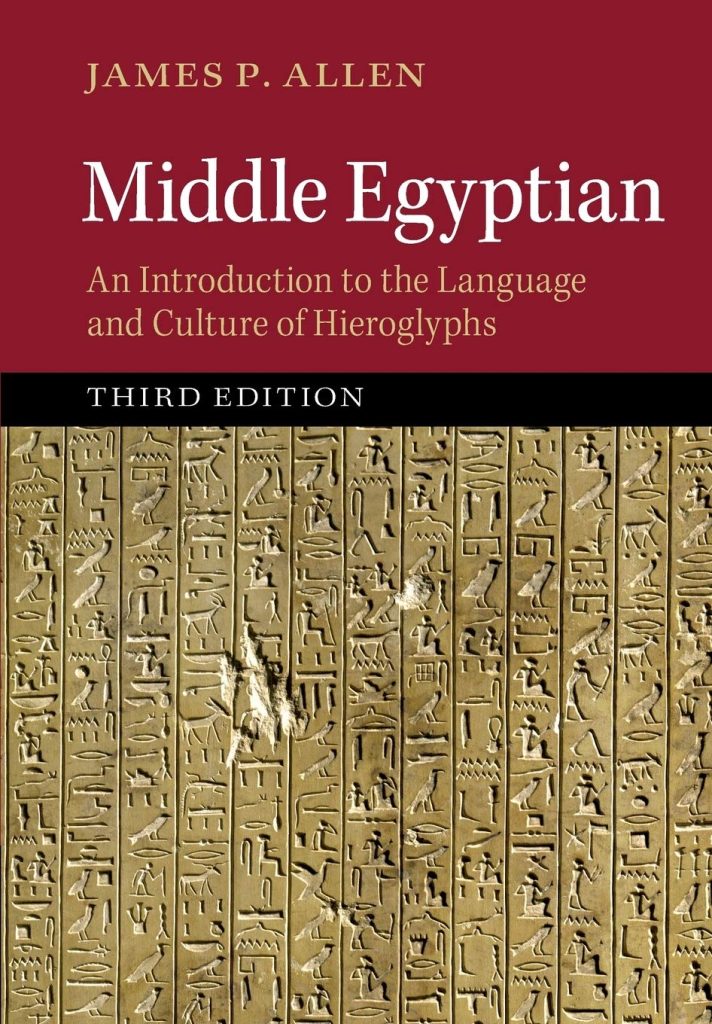
Allen, James P., Middle Egyptian: An Introduction to the Language and Culture of Hieroglyphs, 3rd Edition. Cambridge University Press, 2014.
This is probably the gold standard for a proper Middle Egyptian grammar and is widely used in university courses. Make sure to get the 3rd edition, as it was substantially revised, particularly in its treatment of the verbal system. Linguistic concepts are clearly explained and followed by plenty of examples.
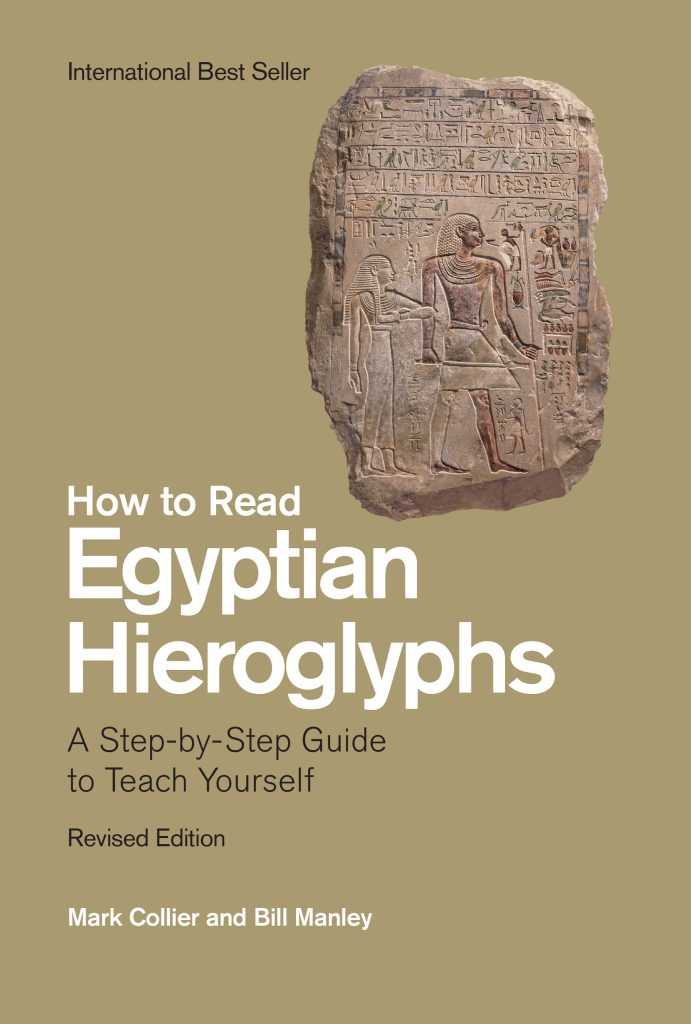
Collier, M., & Manley, B., How to Read Egyptian Hieroglyphs: A Step-by-Step Guide to Teach Yourself. University of California Press, 2022.
If you are starting from the very beginning and don’t want to dive straight into a heavy grammar, I would recommend working through this book first. It is very easy to follow and includes some fun reading examples based on objects from the British Museum.
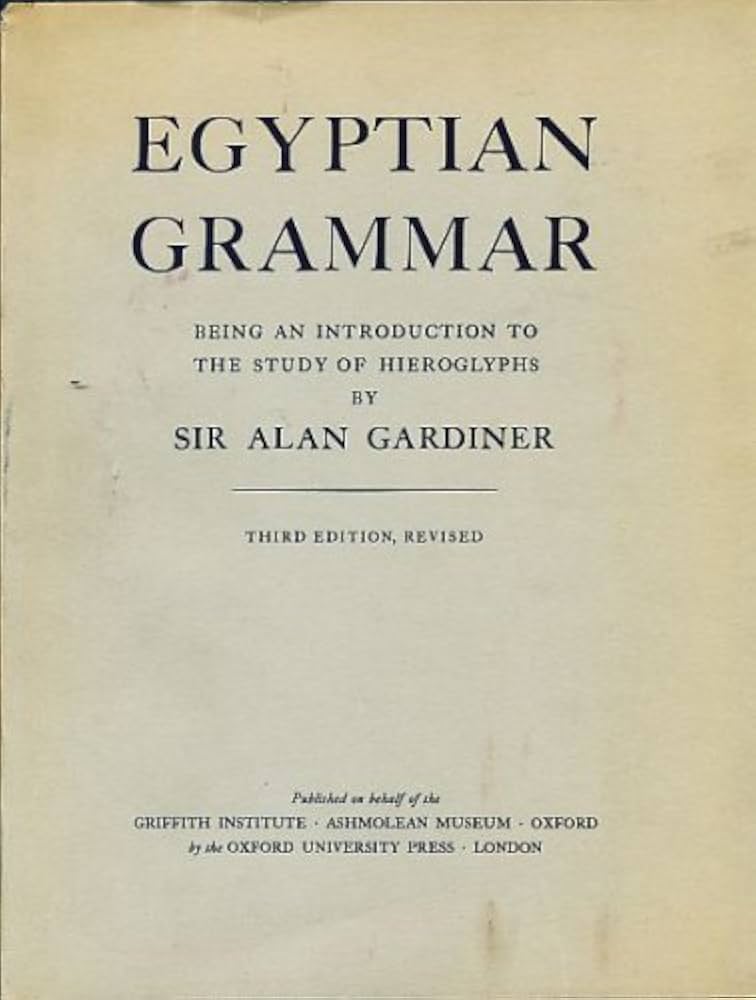
Gardiner, Alan. H., Egyptian Grammar: Being an Introduction to the Study of Hieroglyphs, 3rd Edition. Oxford University Press, 1957.
Many Egyptologists still swear by this classic, and it remains an enormously valuable reference work. It also features a beautiful hieroglyphic typeface commissioned by Gardiner specifically for the publication of Egyptian Grammar in 1927. The book is thorough and in-depth, but it should be read with some caution: later research has replaced some of Gardiner’s ideas, especially his treatment of the verbal system.